
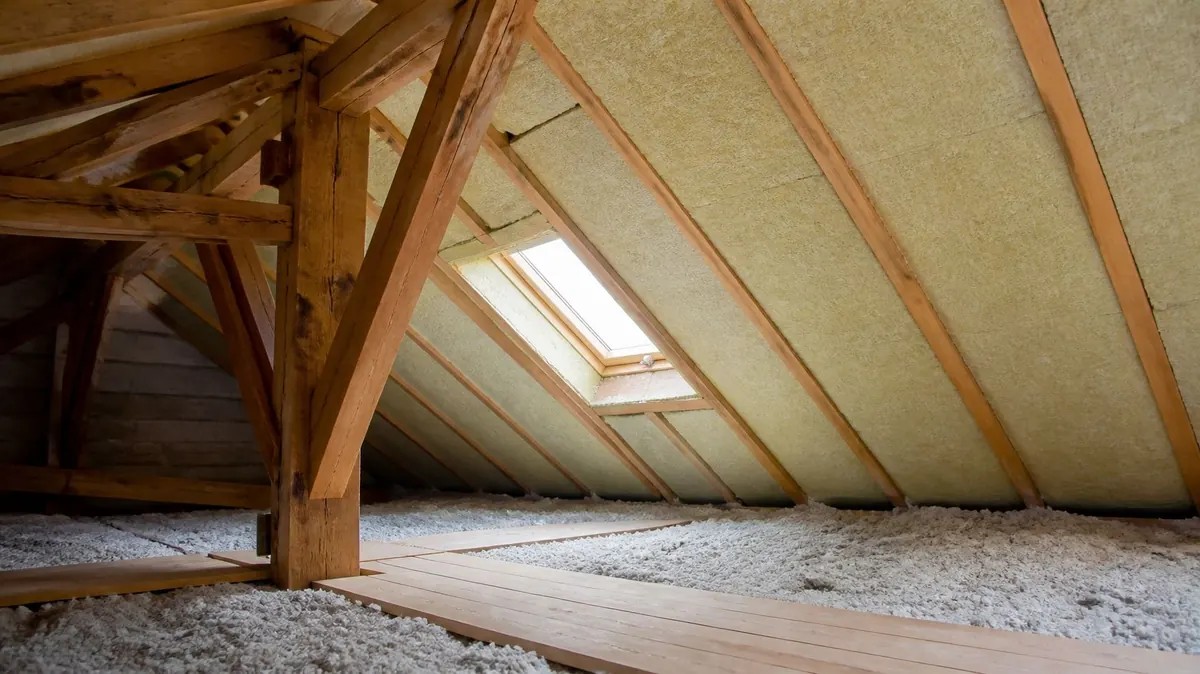
A large share of a house’s heat loss goes through the roof, walls and floors. In a Mediterranean climate, insulation also plays a major role in summer: a well-insulated, well-shaded home stays cooler with no air conditioning, or with air conditioning used less.
The benefits of good insulation
- Less heat loss in winter, so reduced heating needs
- Less overheating in summer, especially under roofs
- More even comfort (fewer cold surfaces)
- Heating or air-conditioning equipment that can be less powerful
- A possible improvement in the energy rating (DPE), depending on the works carried out
When is it relevant?
- Unconverted lofts with little or no insulation, or compacted or degraded insulation
- Rooms under the roof that are very hot in summer
- Walls cold to the touch in winter or signs of damp
- A heat pump or air-conditioning project
- A home for sale or rent whose energy performance needs improving
Limits and points to check
A solution that suits one home does not necessarily suit another. These points are systematically examined during the on-site study:
- Loft access and the condition of the roof frame
- Managing moisture and ventilation: insulating without ventilating can cause problems
- Loss of living space when walls are insulated from the inside
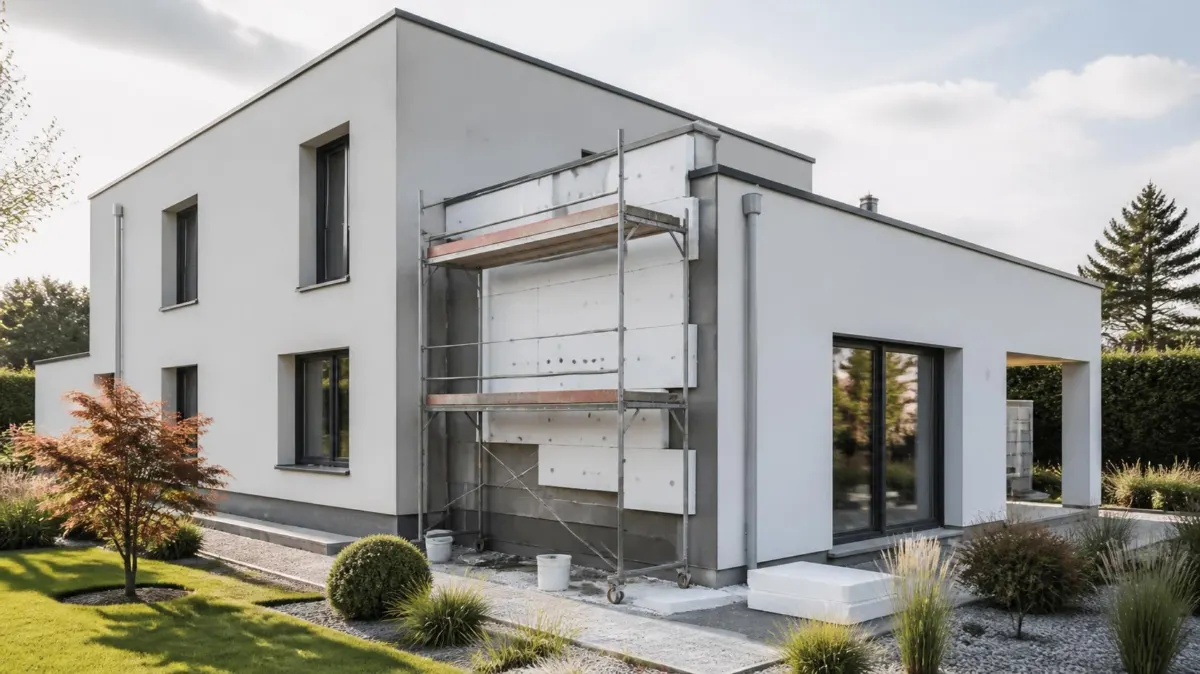
- Planning rules and façade appearance for external insulation
- Continuity of insulation (thermal bridges) between the different walls
Before signing with an installer, read about real situations encountered in the Var, the warning signs and your rights: choosing your installer.
How does the support work?
- Your request and the appointmentYou describe your project online (pre-study) or by phone. With your agreement, the adviser calls you back to arrange an appointment at your home.
- The full on-site study, free and with no obligationIn your presence: analysis of your bills and consumption, areas to treat (loft, roof, walls, floors), access, condition of the supports, ventilation, humidity and real surface areas. If the project makes sense, the adviser presents the partner installer’s detailed offer.
- Time to decideYou can sign at the appointment or take time to think. Once you have agreed, you have the legal 14-day withdrawal period.
- The partner installer’s check visitAfter the withdrawal period, the partner installer visits the site in turn to confirm all the technical points.
- Formalities and any financial aidTown-hall declaration for external insulation, condominium approval where applicable, any financial aid and, if needed, a financing application. If an essential approval is refused, the project is cancelled.
- Installation, checks and after-sales serviceOnce all approvals have been obtained, the works are carried out by a qualified (RGE) partner tradesperson with ten-year insurance, then checked with you at handover. The partner installer then provides after-sales service under its own guarantees and those of the manufacturers.
What influences the cost of your project
We do not give prices without a study: a price displayed online could not take your situation into account. The main factors that change the quote are:
- The area to insulate and its real surface
- The technique (blown, rolls, panels, internal or external insulation)
- The insulant chosen and the thickness required
- Accessibility and preparatory work (removal, treatment, vapour barrier)
- The ventilation to create or adapt
Financial aid: whether aid exists, its amount and your eligibility depend on your situation (income, status, type of home), on the technical characteristics of the project and on the schemes in force at the time of the study. We check these points with you; no aid is guaranteed in advance.
Insulation in the Var and western Alpes-Maritimes
Here, insulation is designed as much for summer as for winter. Under tile roofs, the heat accumulated during the day is released at night: the choice of insulant and its thickness directly affects bedroom comfort.
Houses from the 1960s to 1980s, numerous around Toulon, Fréjus or Grasse, were often built with little or no insulation. Unconverted lofts are frequently the first item to deal with.
See the communes we serve in the Var and the west of the Alpes-Maritimes.
Frequently asked questions
Where should I start: loft or walls?
The loft is often the priority because heat rises and insulating it is generally simpler. The on-site study confirms the priorities in your home.
Is insulation useful in summer?
Yes. Suitable insulation slows heat entering, especially under the roof. It works together with solar protection (shutters, brise-soleil) and good night-time ventilation.
How do I know if my loft is poorly insulated?
Rooms under the roof very hot in summer, cold in winter, compacted or thin insulation: these are the signs to look for.
Does ventilation need to be redone?
Not always, but it must be checked: high-performance insulation without sufficient air renewal can encourage damp.
Complementary solutions
- Heat pump
- Reversible air conditioning
- Whole-home energy renovation
- High-performance construction: walls, floors, roof
Our commitments
- A study of your situation before any proposal
- Clear explanations of feasibility, constraints and administrative steps
- No unverified promise of aid, savings or return on investment
- A callback agreement that you can withdraw at any time
Who carries out the installation? Agence IntExt, an Independent Business Manager (VDI Mandataire), advises you, studies your project and coordinates its delivery. The Agency does not carry out the works itself: the installation is entrusted to independent partner installers, selected for their qualifications (RGE, QualiPV, QualiPAC… depending on the solution) and their ten-year (décennale) insurance, so that the installation complies with the standards and regulations in force.
Request your insulation pre-study
Under 2 minutes, no automatic price. An adviser analyses your request.