
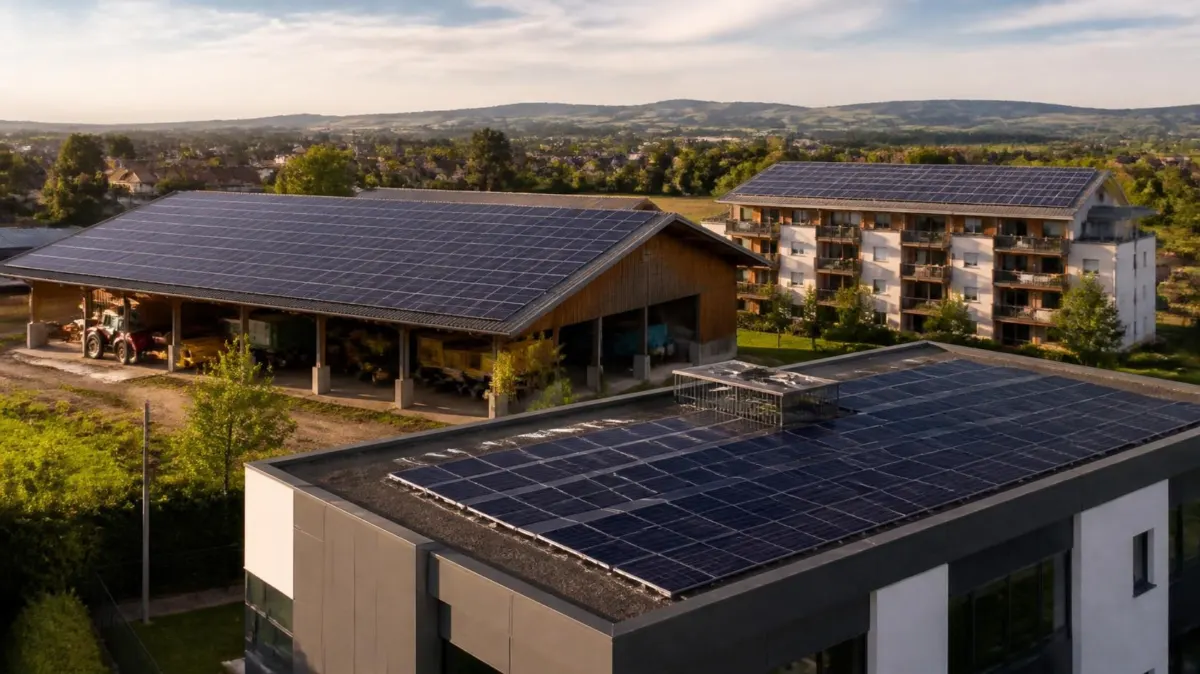
This route is aimed at businesses, farms, local authorities and condominiums with large roof or car-park surfaces. It is separate from the support offered to private individuals.
What we study
- Surface area, orientation and condition of the roofs
- The structure of the building and its capacity to carry the panels
- The site’s consumption profile and the value of self-consumption
- Grid connection conditions
- The contractual and regulatory framework applicable at the time of the study
Collective self-consumption
Electricity produced on one building can be shared between several nearby consumers (condominium, business park, public buildings, housing estate), within a perimeter set by regulations. Rather than injecting surplus at a low buy-back tariff, the producer sells it to neighbours at an intermediate price. This set-up requires studying energy allocation, contracts and metering: we look at it with you if your project lends itself to it.
Car-park canopies and solar carports
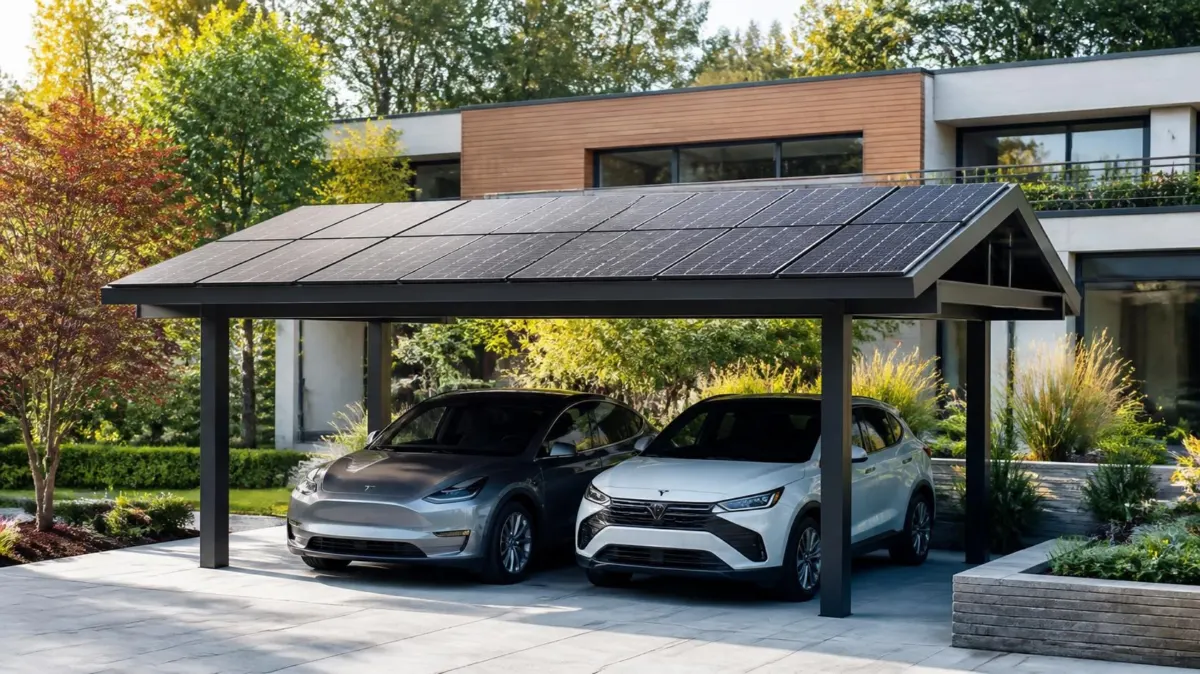
A photovoltaic canopy or carport shelters vehicles from sun and weather while producing electricity. It suits condominium, business and local-authority car parks, as well as private individuals with an outdoor parking space.
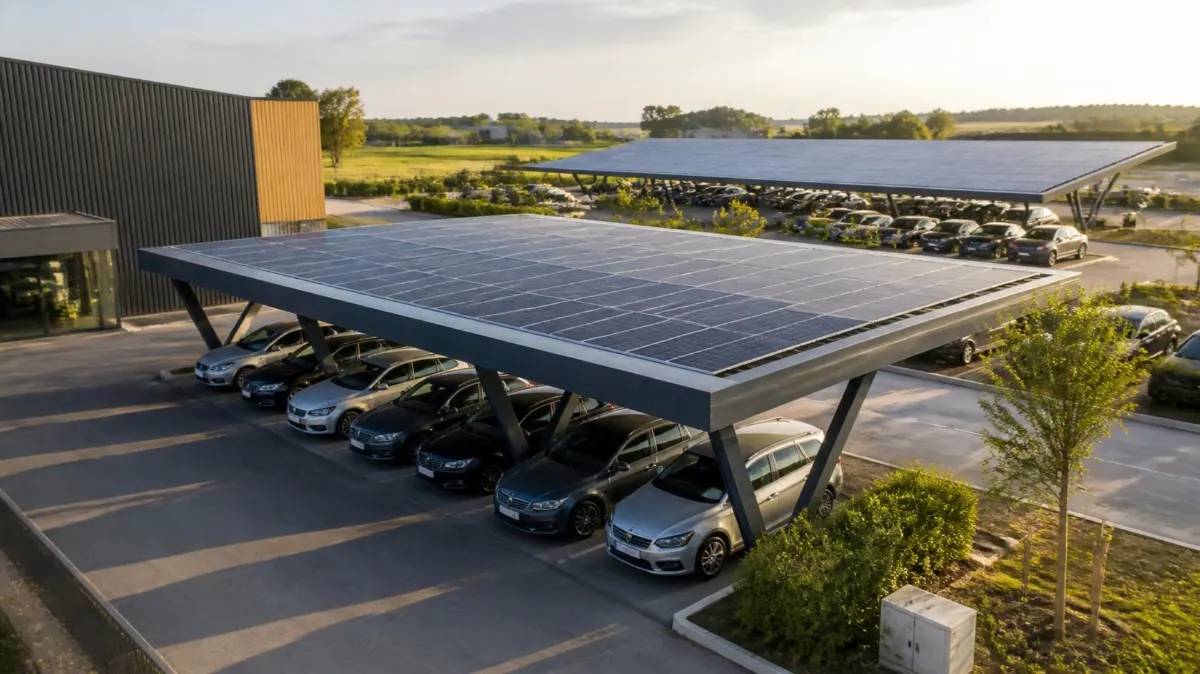
- Car parks over 1,500 m²: the law on accelerating renewable energy production (law no. 2023-175 of 10 March 2023) requires, under conditions and on a timetable, part of outdoor car parks to be fitted with photovoltaic canopies. We check with you whether your site is concerned.
- Planning: a canopy or carport requires a prior declaration or a building permit depending on its surface area and the local urban plan.
- Vehicle charging: a carport can be combined with charging points, subject to a study of the electrical connection.
Every study sets out explained assumptions, never a guaranteed return: actual output, tariffs and the regulatory framework may change.