
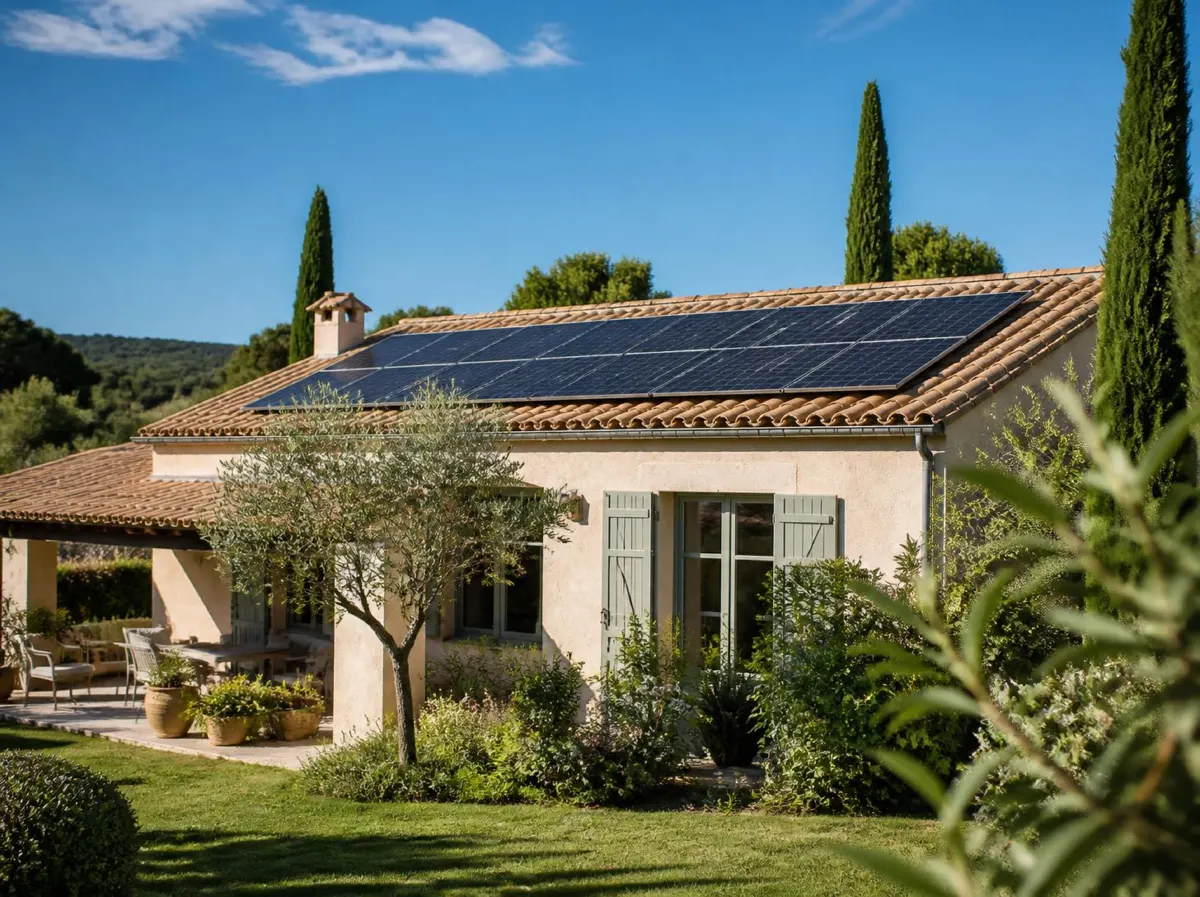
Solar power and energy renovation are real ways to cut your bills and improve your comfort. But in recent years, misleading sales practices and badly designed installations have damaged the trust of many homeowners. This page describes, without naming anyone, real situations encountered in the Var by contacts and customers of other providers. Its purpose is simple: to help you decide with full knowledge of the facts, and to help you if your installation is already causing problems.
Real situations, encountered in the Var
Each case below was reported to our agency. The people and companies involved are not named.
A contract that was not understood
Total or partial resale: a choice never explained
What happened: The installation was connected for total (or partial) resale without the customer understanding what this meant, or really choosing it.
The risk: With total resale, all the output goes to the grid: the customer keeps buying all of their electricity. The purchase contract usually runs for 20 years.
The right reflex: Ask for a written explanation of both modes (self-consumption with surplus sale, or total sale) and their effect on your bill before signing.
A colossal investment for a standard house
What happened: A very elderly retired couple financed an oversized installation at a price out of all proportion to the needs of an ordinary house.
The risk: Heavy, long-lasting debt, often through a loan signed the same day, and lengthy, exhausting proceedings.
The right reflex: Never sign under pressure: a reliable professional gives you time to think and reminds you of your 14-day withdrawal period. Compare several detailed quotes and involve a relative in the decision, especially for an elderly or isolated person. Choose a regional partner with a very good reputation, and do not hesitate to check the company on www.pappers.fr or www.societe.com.
A badly sized installation
“I thought I would stop buying electricity”
What happened: The customer thought he had invested so as to no longer depend on the grid. The undersized installation covers only a small part of his needs.
The risk: Financial disappointment and a much longer payback than expected.
The right reflex: A solar installation reduces your electricity purchases; it almost never eliminates them completely (nights, winter, cloudy days). Be wary of any promise of total self-sufficiency or a “zero bill”.
6 kWp and a battery, yet over 6,000 kWh bought each year
What happened: A 90 m² house in the Var, 4 occupants, a 6 kWp installation with a 5.2 kWh physical battery: the household still buys over 6,000 kWh a year from the grid.
The risk: In the Var, a well-oriented installation of this size produces a lot (around 1,300 to 1,500 kWh per kWp per year depending on orientation, tilt and shading). If purchases stay this high, the design is not suited to the home: evening and winter consumption not studied, electric heating or hot water, a battery that is too small, appliances not controlled, surplus sent to the grid.
The right reflex: Insist on a study based on your actual consumption (Linky readings, hour by hour if possible) and clear figures: estimated output, share self-consumed, share of your needs covered.
No follow-up after installation
An app that does not work
What happened: The monitoring app does not show the panels’ output: the customer does not know whether the installation is working properly.
The risk: A fault or a drop in output can go unnoticed for months.
The right reflex: Before installation, ask which monitoring solution is planned, who sets it up at commissioning and who supports you afterwards.
An installer that no longer exists
What happened: A problem occurs on the installation, but the company cannot be reached: it has disappeared.
The risk: Being left alone, not knowing who can diagnose and repair it.
The right reflex: Keep your quotes, invoices and ten-year (décennale) insurance certificate. Even if the company has gone, the décennale guarantee can in principle still be claimed from its insurer for 10 years after the works were handed over, and manufacturers’ warranties (panels, inverter, battery) remain valid.
Upgrading your installation: who to contact?
What happened: A homeowner selling his surplus under a 20-year purchase obligation contract would like to add a virtual battery. He does not know who to turn to.
The risk: Changing how your output is valued during the contract has consequences (termination terms, supplier’s offer, real benefit given your consumption) that must be studied before any decision.
The right reflex: Have your situation studied: we can compare the options with you (virtual or physical battery, appliance control, keeping your current contract) and explain what each one changes.
Non-compliant installation work
Panels sticking out beyond the roof
What happened: Panels fitted right up to the ridge and overhanging the tiles above the gutters. The job had been sold by a large company and handed to subcontracted crews, with no check on the work.
The risk: Installation contrary to good practice and to manufacturers’ instructions, which require clearances from the ridge, verges and eaves: risk of leaks, wind uplift, insurance refusal and loss of warranties.
The right reflex: Ask who will actually do the installation. If it is a subcontractor, their qualifications and décennale insurance must cover the work, and the company selling you the job remains responsible for it.
Warning signs before you sign
- Unsolicited approaches (phone, text, email, social media), or a salesperson who claims to be sent by the State, the town hall or an energy supplier.
- Pressure to sign the same day: “exceptional offer”, “last places”, “price valid today only”.
- A promise of total self-sufficiency, a “zero bill”, a “self-financing” installation or “guaranteed” grants.
- A quote drawn up without inspecting the roof and without studying your actual consumption.
- A quote without brands, models or ratings (panels, inverter, battery, monitoring), or without the chosen connection mode.
- A loan offered immediately, over a long period, without explaining its total cost.
- A décennale insurance certificate or qualification that cannot be found, or that you are refused.
The checks that protect you
- The qualification of the company doing the work (RGE, QualiPV for solar, QualiPAC for heat pumps…), which can be checked in the official France Rénov’ directory and on the Qualit’EnR website.
- The décennale insurance certificate for the current year, in the company’s name, covering the planned works precisely.
- The company’s identity: SIREN number, real address, years in business, and the name of the company doing the installation if it is different.
- A costed, explained study: estimated output, share self-consumed, share of your needs covered, how the surplus is valued.
- The formalities included: planning declaration, electrical compliance certificate (Consuel), grid connection, surplus sale contract.
- Monitoring and after-sales service: monitoring app, contact in case of a fault, manufacturers’ warranties.
Your rights when you are approached
- 14 days to change your mind after a contract signed at home, at a trade fair or outside the professional’s premises (right of withdrawal).
- No payment can in principle be requested before 7 days after signing a contract concluded at your home.
- Approaches by phone, text, email or social media for energy renovation works or solar panels are prohibited, except under an ongoing contract. Since 11 August 2026, any telephone prospecting also requires your prior consent.
- The contract must state whether the company holds the qualification required for grants; otherwise it may be cancelled.
- If you encounter an abusive practice, you can report it on SignalConso and get free advice from your ADIL, a France Rénov’ adviser or a consumer association.
General information, up to date at the date of publication, which does not replace legal advice. Sources: French Consumer Code; Law no. 2020-901 of 24 July 2020; Law no. 2025-594 of 30 June 2025 against public-aid fraud; ANIL; France Rénov’.
Already having problems with your installation? We help you see clearly
Disappointing output, a silent app, an unreachable installer, doubts about the installation, a contract you do not understand or a plan to upgrade: we review your situation, even if the installation was carried out by another company.
- A first conversationYou describe the problem to us, by phone or online, with no commitment.
- Review of your documentsQuotes, invoices, purchase contract, output and consumption readings: we go through them with you and explain what they actually say.
- An on-site check if neededA qualified, insured partner company checks the installation: fitting, wiring, inverter, battery, monitoring.
- Clear solutionsAdjustment, repair, bringing it up to standard, adding a battery or appliance control, or sometimes the advice to change nothing. For a dispute, we advise you to turn to the right contacts: décennale insurer, manufacturer, court conciliator, consumer association or lawyer.
Our commitment: transparent advice
The value of solar power for gaining energy independence has been badly discredited by unscrupulous providers. We believe that clear, explanatory and professional dialogue is the only way to restore trust. Agence IntExt, an Independent Business Manager (VDI Mandataire), does not push you to sign: we explain what an installation can really bring you, its limits and its constraints, so that the decision remains yours.
- A study based on your actual consumption, before any proposal
- Written explanations of the connection mode and its consequences
- No promise of total self-sufficiency, savings or grants that has not been checked
- Time to think: no pressure to sign, and 14 days to change your mind after a contract signed at home
- Works carried out by qualified, insured partner companies whose names you know
Who carries out the installation? Agence IntExt, an Independent Business Manager (VDI Mandataire), advises you, studies your project and coordinates its delivery. The Agency does not carry out the works itself: the installation is entrusted to independent partner installers, selected for their qualifications (RGE, QualiPV, QualiPAC… depending on the solution) and their ten-year (décennale) insurance, so that the installation complies with the standards and regulations in force.
Frequently asked questions
Can you work on an installation fitted by another company?
Yes. We first review the situation and the documents. If work is needed, it is carried out by a qualified, insured partner company; before any work, we check the possible effect on existing warranties.
My installer has disappeared: what should I do?
Gather your invoices and the décennale insurance certificate: the insurer’s details should appear there. In the event of liquidation, the liquidator can give them to you. Manufacturers’ warranties remain valid. We can have the installation diagnosed by a qualified partner.
I have a 20-year surplus purchase contract: can I add a virtual battery?
This has to be studied case by case: terms for leaving the current contract, available offers, real benefit given your consumption. A physical battery or controlling your appliances may also be options. We compare the options with you before any decision.
Can you help me in a dispute with my installer?
We are neither lawyers nor court-appointed experts. We can help you understand the technical aspects of your installation and direct you to the competent contacts: court conciliator (free), consumer association, ADIL or lawyer.
Can a solar installation make me completely self-sufficient?
In the vast majority of grid-connected homes, no: at night, in winter and on cloudy days, you will still buy electricity. A well-designed installation greatly reduces these purchases. The point of a virtual battery (an additional monthly subscription) or a physical battery (an additional investment) is precisely to let you use your surplus production free of charge. Be wary of any promise to the contrary.
Find out more
- Solar panelsSelf-consumption, surplus, battery
- Advice and guidesPrepare your project
- Frequently asked questionsOur answers
Any doubts before signing? Let’s talk
Have you received a quote or a sales proposal? We can go through it with you and explain what it contains, with no commitment.